What Happens If a Radon Test Fails?
What Happens If a Radon Test Fails?
Hearing that a radon test has “failed” can sound alarming for many homeowners. In most cases, however, a failed radon test simply means the home tested above the recommended action level for indoor radon concentration.
The good news is that elevated radon levels can often be reduced effectively with proper mitigation systems and professional indoor air quality solutions.
In this guide, we’ll explain what happens if a radon test fails, what homeowners should expect next, how radon testing works, and why this issue is especially important for homeowners in Connecticut.
What Does a Failed Radon Test Mean?
A failed radon test typically means the home’s radon level tested above the recommended action level established by the United States Environmental Protection Agency.
EPA Recommended Action Level
The EPA recommends taking action when radon levels reach:
-
4.0 pCi/L or higher
If your home tests at or above this level, mitigation is generally recommended to help reduce long-term exposure.
It’s important to understand that a failed test does not mean the home is unsafe to occupy immediately. Instead, it means elevated radon levels were detected and should be addressed appropriately.
Why Radon Testing Matters
Radon is a naturally occurring radioactive gas that forms underground and can enter homes through:
-
Foundation cracks
-
Crawl spaces
-
Basement floors
-
Utility penetrations
-
Sump pits
Because radon:
-
Has no smell
-
Has no color
-
Has no visible warning signs
testing is the only reliable way to know whether elevated levels exist indoors.
What Happens After a Failed Radon Test?
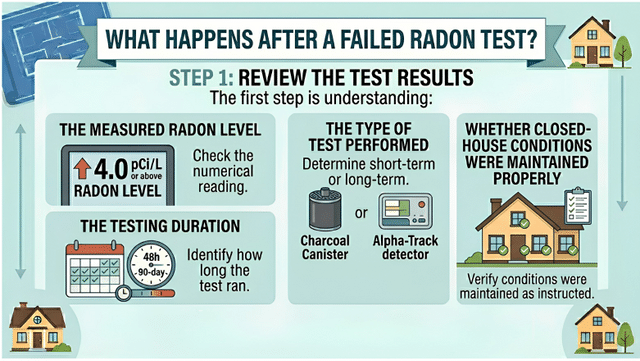
Step 1: Review the Test Results
The first step is understanding:
-
The measured radon level
-
The type of test performed
-
The testing duration
-
Whether closed-house conditions were maintained properly
Professional radon testing helps ensure more accurate and reliable readings.
Step 2: Consider Confirmatory Testing
In some situations, homeowners may choose:
-
A second short-term test
-
A long-term radon test
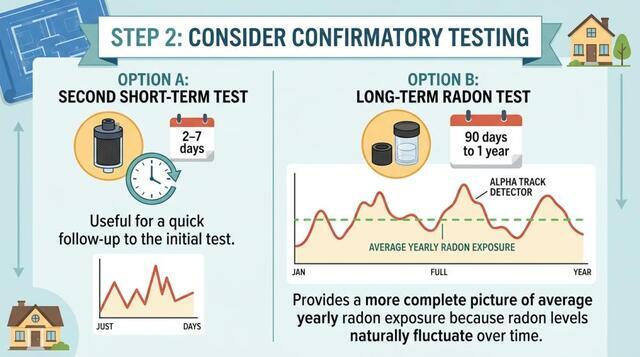
Long-term testing may provide a more complete picture of average yearly radon exposure because radon levels naturally fluctuate over time.
Step 3: Evaluate Mitigation Options
If elevated levels are confirmed, professional radon mitigation may be recommended.
Most systems use:
-
Specialized vent piping
-
Continuous radon fans
-
Sub-slab depressurization
-
Crawl space mitigation methods
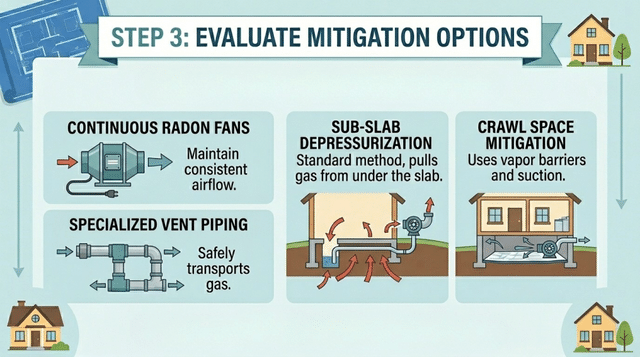
These systems are designed to redirect radon gas safely outdoors before it enters living spaces.
Can a Home Be Fixed After a Failed Radon Test?
Yes — and this is one of the most important things homeowners should understand.
Elevated Radon Is Usually Correctable
Many homes with elevated radon levels can be successfully mitigated with properly designed systems.
Mitigation often helps:
-
Lower radon concentrations
-
Improve indoor air quality
-
Support healthier living conditions
-
Provide long-term monitoring and protection
At Apex Radon Solutions, we remind homeowners that a failed radon test is not the end of the story — it’s simply important information that allows you to take the next step confidently.
Connecticut and Radon Testing
Why Connecticut Homeowners Should Pay Attention
Connecticut has many areas with naturally elevated radon potential due to local geology and soil composition.
Higher radon readings are commonly found in parts of:
-
Hartford County
-
Tolland County
-
Litchfield County
-
Fairfield County
-
New Haven County
Because of this, radon testing is especially important for Connecticut homeowners — even in newer homes.
Connecticut Homes Can Vary Significantly
Two neighboring homes may have very different radon levels depending on:
-
Foundation design
-
Soil pathways
-
Ventilation
-
Crawl space conditions
-
Air pressure differences
That’s why every home should be tested individually rather than relying on neighborhood assumptions.
Real Estate Transactions in Connecticut
Radon Testing is commonly performed during:
-
Home purchases
-
Property sales
-
Basement finishing projects
-
Indoor air quality evaluations
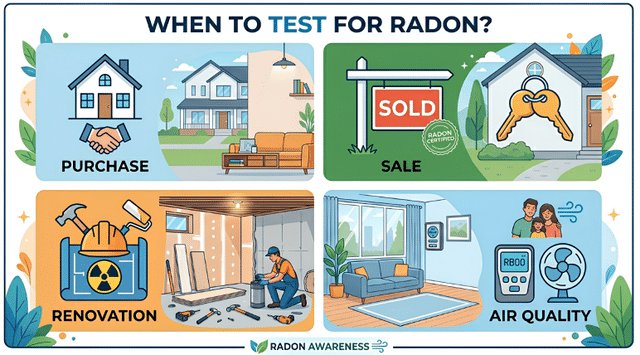
Many Connecticut buyers now view radon testing as a normal part of protecting long-term indoor air quality.
How Long Does Radon Mitigation Take?
Most residential mitigation systems can often be installed within:
-
One day
The exact timeline depends on:
-
Foundation type
-
Home layout
-
Crawl space conditions
-
Vent routing requirements
After installation, follow-up testing is usually recommended to confirm reduced radon levels.
Why Indoor Air Quality Should Be Viewed as a Whole System
At Apex Radon Solutions, we believe radon should not be viewed as an isolated issue.
Homes with elevated radon may also experience:
-
Moisture problems
-
Crawl space humidity
-
Poor ventilation
-
Airflow imbalances
-
Indoor air quality concerns
That’s why long-term solutions often involve looking at:
-
Ventilation
-
Humidity control
-
Crawl space conditions
-
Air sealing
-
Radon mitigation together
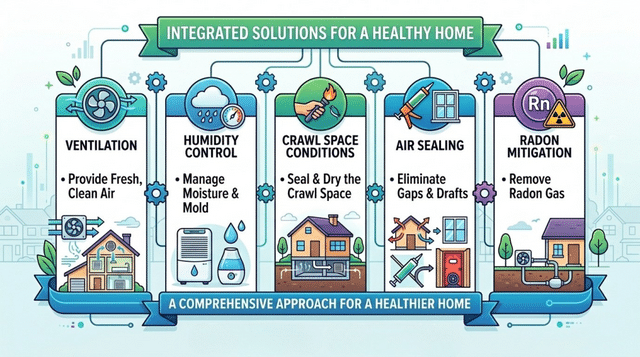
A healthier home environment starts with understanding how all these systems work together.
Trusted Radon Testing and Mitigation Services
At Apex Radon Solutions, we understand that receiving elevated radon test results can feel overwhelming. Our goal is to provide homeowners with clear information, dependable guidance, and practical solutions that improve indoor air quality and long-term peace of mind.
Whether you need professional radon testing, mitigation services, crawl space solutions, or indoor air quality support, our team is here to help you move forward confidently.
Contact Apex Radon Solutions today to learn more about radon testing and mitigation services for your Connecticut home.
