A Homeowner's Guide to Radon Testing
How to Radon Test Your Home
Radon is one of the most important indoor air quality concerns homeowners should understand, yet many people are unsure where to begin when it comes to testing. Since radon is invisible, odorless, and naturally occurring, testing is the only reliable way to know whether elevated levels are present inside your home.
In this guide, we’ll explain how to radon test your home, how radon testing works, the perfect time to test for radon, and what homeowners can expect when it comes to radon testing price and professional services.
Why Radon Testing Matters
Radon gas forms naturally underground and can enter homes through:
-
Foundation cracks
-
Crawl spaces
-
Basement floors
-
Utility penetrations
-
Sump pits
Once trapped indoors, radon levels can build over time without any visible warning signs.
According to the United States Environmental Protection Agency, testing is the only way to know if your home has elevated radon levels.
Even newly built homes and well-maintained properties can have high radon readings.
How Does Radon Test Work?
One of the most common homeowner questions is: how does radon test work?
Radon testing measures the concentration of radon gas inside the home over a specific period of time.
Short-Term Radon Testing
Short-term tests usually last:
-
2 to 7 days
These tests are commonly used during:
-
Home inspections
-
Real estate transactions
-
Initial indoor air quality evaluations
Testing devices are typically placed:
-
In the lowest livable area of the home
-
Away from windows and vents
-
In normal breathing zones
Long-Term Radon Testing
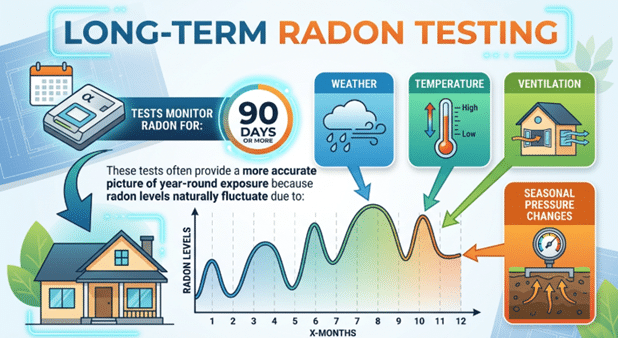
Long-term tests monitor radon levels for:
-
90 days or more
These tests often provide a more accurate picture of year-round exposure because radon levels naturally fluctuate due to:
-
Weather
-
Temperature
-
Ventilation
-
Seasonal pressure changes
Perfect Time to Test for Radon
Many homeowners ask when the perfect time to test for radon is.
Fall and Winter Are Often Ideal
Radon testing is commonly recommended during colder months because:
-
Windows remain closed
-
Homes are more tightly sealed
-
Indoor pressure differences become stronger
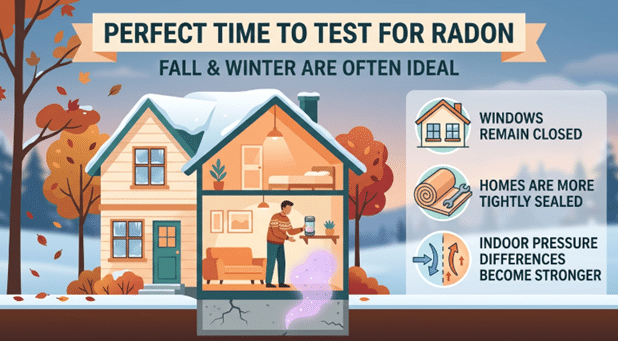
These conditions can create higher and more stable radon readings.
But Testing Anytime Is Better Than Not Testing
While colder seasons are often preferred, radon testing can still be performed year-round. The most important thing is simply knowing your levels rather than waiting indefinitely for a “perfect” time.
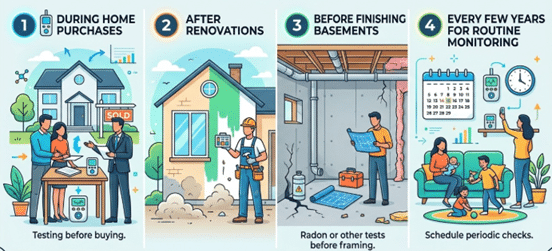
Homeowners should especially consider testing:
-
During home purchases
-
After renovations
-
Before finishing basements
-
Every few years for routine monitoring
How to Prepare Your Home for a Radon Test
Proper preparation helps ensure accurate results.
Closed-House Conditions
For short-term testing, homeowners are usually advised to:
-
Keep windows closed
-
Limit exterior door use
-
Avoid whole-house fans
-
Maintain normal HVAC operation
These conditions should typically be maintained for at least 12 hours before testing begins.
Avoid Testing During Severe Weather
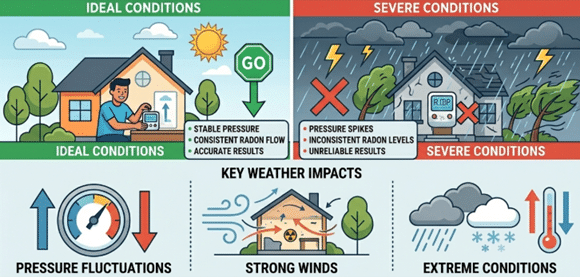
Heavy storms or unusual weather conditions may temporarily affect radon readings and testing consistency.
Radon Testing Price: What Homeowners Can Expect
Another common question is about radon testing price.
Average Radon Testing Costs
Professional radon testing may range from:
-
$100 to $300+ depending on:
-
Test type
-
Home size
-
Monitoring duration
-
Real estate requirements
-
Certified reporting needs
DIY radon test kits are often less expensive, but professional testing may provide:
-
More accurate monitoring
-
Proper device placement
-
Certified documentation
-
Expert interpretation of results
What Happens If Radon Levels Are High?
If elevated Radon levels are discovered, homeowners may need professional radon mitigation.
Typical Mitigation Solutions Include:
-
Sub-slab depressurization
-
Radon vent piping
-
Continuous radon fans
-
Crawl space mitigation systems
A properly designed mitigation system can significantly reduce indoor radon levels and improve long-term indoor air quality.
Why Professional Testing Makes a Difference
At Apex Radon Solutions, we believe testing should provide homeowners with clear, trustworthy information — not confusion or unnecessary alarm.
Professional testing helps ensure:
-
Accurate results
-
Proper device placement
-
Reliable reporting
-
Clear next-step guidance
Indoor air quality decisions should be based on real measurements, not guesswork.
Trusted Radon Testing and Indoor Air Quality Solutions
At Apex Radon Solutions, we believe every homeowner deserves accurate information and practical guidance when it comes to indoor air quality. Whether you need professional radon testing, help understanding your results, or guidance on mitigation options, our team is here to support you with clear answers and dependable service.
If you’re ready to test your home for radon or learn more about protecting your indoor air quality, contact Apex Radon Solutions today to schedule professional radon testing services.
