Understanding EPA Acceptable Radon Levels in Homes
EPA Radon Action Level: What Does It Mean?
When homeowners receive radon test results, one of the first questions they often ask is: what is the EPA radon action level?
Understanding EPA radon standards helps homeowners make informed decisions about indoor air quality and whether mitigation may be recommended. Because radon is invisible, odorless, and naturally occurring, testing is the only reliable way to know if elevated levels are present inside a home.
In this guide, we’ll explain EPA radon levels, what the EPA considers acceptable radon levels, and what homeowners should know about reducing long-term exposure.
What Is the EPA Radon Action Level?
The United States Environmental Protection Agency recommends taking action when indoor radon levels reach:
-
4.0 pCi/L (picocuries per liter) or higher
This number is commonly referred to as the EPA radon action level.
If a home tests at or above 4.0 pCi/L, the EPA recommends installing a radon mitigation system to reduce indoor radon concentrations.
Why Did the EPA Choose 4.0 pCi/L?
The EPA action level is based on long-term health risk studies related to radon exposure and lung cancer risk.
Important Things Homeowners Should Understand
-
There is no completely risk-free level of radon exposure.
-
Lower radon levels still carry some level of risk over time.
-
Higher radon concentrations increase potential health concerns.
-
Long-term exposure matters more than short-term exposure.
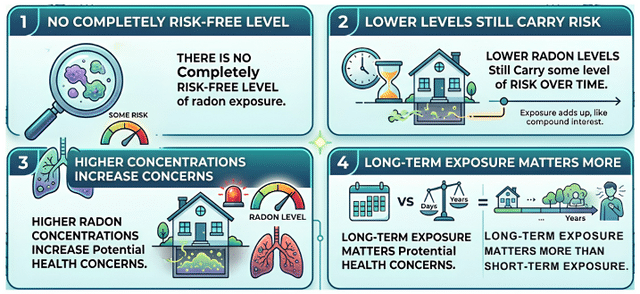
Because radon exposure builds gradually over many years, reducing indoor levels as much as reasonably possible is encouraged.
EPA Acceptable Radon Levels
Many homeowners search for EPA acceptable radon levels hoping to identify a “safe” number.
What the EPA Actually Says
The EPA recommends:
-
Taking action at 4.0 pCi/L or higher
-
Considering mitigation for levels between 2.0 and 4.0 pCi/L
Outdoor air naturally contains small amounts of radon, usually around:
-
0.4 pCi/L
Average indoor radon levels in homes are often higher because homes trap air and create pressure differences that pull soil gases inside.
EPA Radon Standards and Home Testing
EPA radon standards emphasize that testing is the only way to determine actual radon levels inside a home.
Why Testing Matters
Radon cannot be:
-
Seen
-
Smelled
-
Tasted
-
Detected without specialized equipment
Even neighboring homes can have very different radon levels depending on:
-
Soil conditions
-
Foundation design
-
Ventilation
-
Construction methods
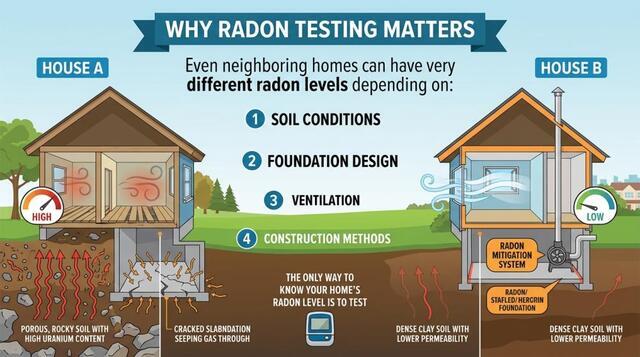
That’s why every home should be tested individually.
What Happens If Radon Levels Are High?
If testing shows elevated radon levels above the EPA action level, professional mitigation may be recommended.
How Radon Mitigation Works
Most mitigation systems use:
-
Specialized vent piping
-
Continuous radon fans
-
Sub-slab depressurization
-
Exterior vent discharge systems
These systems help redirect radon gas outdoors before it enters living spaces.
Properly installed mitigation systems can often reduce radon levels significantly.
Are New Homes Exempt from Radon Problems?
No. Elevated EPA radon levels can occur in:
-
Older homes
-
Newly constructed homes
-
Homes with basements
-
Crawl spaces
-
Slab foundations
Radon is related more to geology and airflow conditions than the age of the home itself.
Why Long-Term Monitoring Matters
Radon levels may fluctuate over time due to:
-
Seasonal and Weather changes
-
Airflow/ Ventilation
-
Home Renovations
-
Weather Patterns
-
Daily Cycle
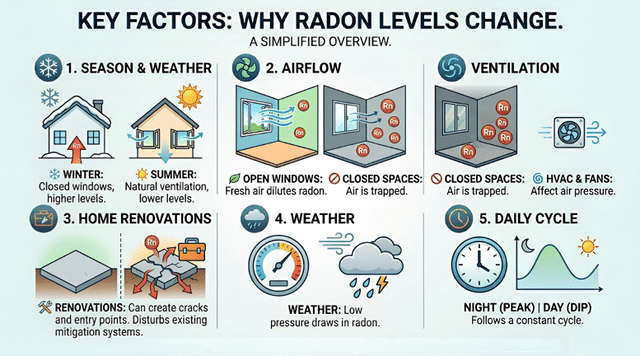
That’s why many professionals recommend:
-
Periodic retesting
-
Monitoring mitigation systems
-
Testing after major home changes
Indoor air quality should be viewed as an ongoing part of maintaining a healthy home environment.
The Connection Between Radon and Indoor Air Quality
At Apex Radon Solutions, we believe indoor air quality involves more than one single issue. Radon, humidity, airflow, ventilation, and moisture control all work together inside the home.
Many homes with:
-
Poor ventilation
-
Crawl space moisture
-
Basement humidity
-
Airflow imbalances
may also experience elevated radon conditions.
Understanding EPA radon standards helps homeowners make informed decisions about improving the overall indoor environment — not just responding to a single test result.
Trusted Radon Testing and Mitigation Services
At Apex Radon Solutions, we believe homeowners deserve clear information and practical indoor air quality solutions they can trust. Whether you need professional radon testing, mitigation services, or guidance understanding EPA radon standards, our team is here to help you make informed decisions with confidence.
If you’re concerned about elevated radon levels in your home, contact Apex Radon Solutions today to learn more about testing, mitigation, and creating a healthier indoor environment for your family.
