What is Radon? Understanding The Invisible Gas in Homes
What Is Radon?
Many homeowners hear about radon during a home inspection, real estate transaction, or indoor air quality discussion. One of the first questions people ask is simple: What is radon?
Radon is a naturally occurring radioactive gas that forms underground and can enter homes through foundations, crawl spaces, and other openings. Because radon is invisible and odorless, most homeowners have no idea it may be present unless testing is performed.
In this guide, we’ll explain what radon gas is, where radon gas comes from, how common radon is in homes, and what causes radon to build up indoors. Understanding these basics helps homeowners make informed decisions about testing, mitigation, and long-term indoor air quality protection.
What Is Radon Gas?
Radon gas is produced naturally as uranium breaks down in soil, rock, and groundwater. This process happens continuously beneath the earth’s surface in many regions.
As radon forms underground, it can move upward through:
-
Soil
-
Rock formations
-
Cracks in foundations
-
Crawl spaces
-
Utility openings
-
Sump pits
Once the gas enters a home, it can become trapped indoors and accumulate over time.
Unlike smoke, mold, or chemical odors, radon cannot be seen, smelled, or tasted. Specialized testing is required to detect it accurately.
According to the United States Environmental Protection Agency, radon exposure is considered one of the leading indoor air quality concerns in residential homes.
Where Does Radon Gas Come From?
One of the most common homeowner questions is: where does radon gas come from?
Radon originates naturally in the ground. As uranium in rocks and soil breaks down over time, radioactive gases are released into surrounding areas.
Common Natural Sources of Radon
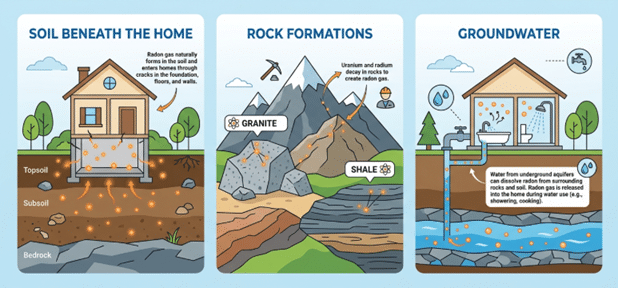
Soil Beneath the Home
The soil directly beneath a home is usually the primary source of indoor radon.
Rock Formations
Certain rock types, including granite and shale, may release higher amounts of radon gas.
Groundwater
In some cases, well water can contain dissolved radon that is released into the air during household water use.
Because geology varies from region to region, radon levels can differ dramatically between homes — even neighboring properties.
What Causes Radon in Homes?
Radon itself forms naturally underground, but certain conditions make it easier for the gas to enter and accumulate inside homes.
What Causes Radon to Build Up Indoors?
Pressure Differences
Homes often create lower air pressure than the surrounding soil. This pressure difference can pull radon gas inward through foundation openings.
Foundation Cracks and Openings
Radon can enter through:
-
Cracks in basement floors
-
Expansion joints
-
Utility penetrations
-
Crawl spaces
-
Sump systems
Limited Ventilation
Poor ventilation can allow radon gas to build up over time, especially in lower levels of the home.
Seasonal Conditions
Closed windows, heating systems, and winter weather can sometimes increase indoor radon concentrations.
It’s important to understand that radon problems are not caused by poor housekeeping or neglect. Even well-maintained homes can have elevated radon levels.
How Common Is Radon in Homes?
Many homeowners are surprised to learn how common radon actually is.
Radon Can Affect Any Type of Home
Elevated radon levels have been found in:
-
Older homes
-
Newly constructed homes
-
Homes with basements
-
Slab-on-grade homes
-
Crawl spaces
-
Townhomes and condos
No home is automatically immune from radon exposure.
Why Neighboring Homes May Have Different Levels
Even homes built side-by-side can have very different radon readings due to:
-
Soil composition
-
Foundation construction
-
Ventilation patterns
-
Air pressure differences
-
Drainage systems
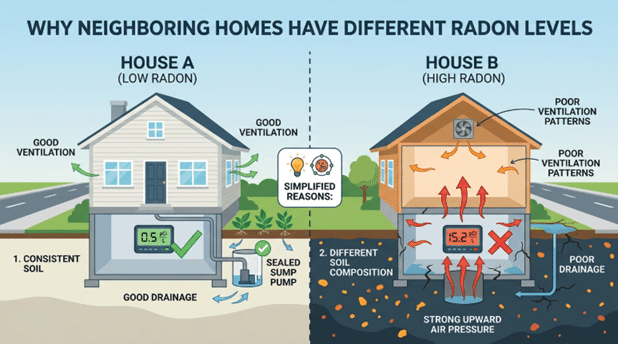
That’s why testing your specific home matters more than relying on neighborhood averages alone.
Why Radon Testing Matters
Because radon cannot be detected without testing, many homeowners never realize elevated levels are present.
When Should Homeowners Test for Radon?
Testing is commonly recommended:
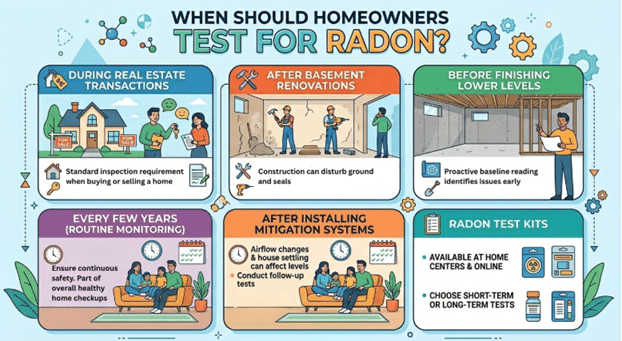
Professional testing provides accurate information about actual radon levels inside the home.
Can Radon Be Reduced?
Yes. If elevated radon levels are found, mitigation systems can often reduce concentrations significantly.
Most Radon Mitigation systems use:
-
Vent piping
-
Specialized radon fans
-
Sub-slab suction methods
-
Exterior vent discharge systems
These systems are designed to redirect radon safely outdoors before it accumulates indoors.
Understanding what radon is naturally leads homeowners to another important question: Is radon dangerous? Learning about potential health risks helps explain why indoor air quality professionals strongly recommend testing and mitigation.
Trusted Radon Testing and Mitigation Services
At Apex Radon Solutions, we believe homeowners deserve straightforward answers and reliable guidance when it comes to indoor air quality. Whether you’re learning about radon for the first time or considering professional testing and mitigation, our team is here to help you understand your options clearly and confidently.
If you have questions about radon, indoor air quality, or testing services for your home, contact Apex Radon Solutions today to learn more about creating a healthier indoor environment for your family.
