Can Air Duct Cleaning Reduce Radon in Your Home?
Does Air Duct Cleaning Help with Radon?
Homeowners concerned about indoor air quality often ask an important question: Does air duct cleaning help with radon?
The answer depends on what problem you’re trying to solve. Air duct cleaning can improve airflow, reduce dust buildup, and support cleaner indoor air, but it is not considered a primary solution for elevated radon levels. Radon mitigation and duct cleaning serve different purposes, although they can work together as part of a broader indoor air quality strategy.
In this article, we’ll explain the connection between radon and HVAC systems, whether duct cleaning affects radon levels, how air quality improvements fit into a healthier home environment, and how much air duct and vent cleaning may cost.
Understanding the Difference Between Radon and Air Duct Contaminants
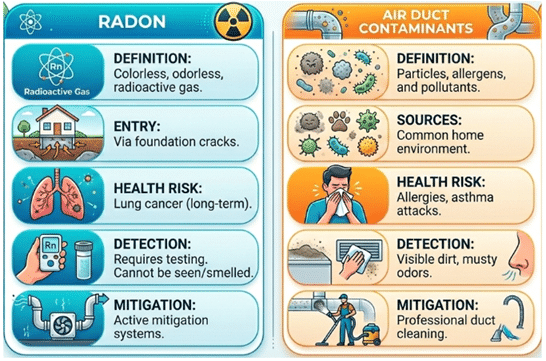
One of the biggest misconceptions homeowners have is assuming radon behaves like dust or debris inside ductwork. In reality, radon is a gas that moves through the air differently than typical HVAC contaminants.
What Is Radon?
Radon is a naturally occurring radioactive gas that forms underground and enters homes through:
-
Foundation cracks
-
Basement floors
-
Crawl spaces
-
Utility openings
-
Sump pits
Because it is invisible and odorless, radon cannot be removed simply by cleaning vents or duct systems.
According to the United States Environmental Protection Agency, elevated radon levels should be addressed through professional radon mitigation systems specifically designed to reduce indoor concentrations safely.
Does Air Duct Cleaning Reduce Radon?
The Short Answer
While HVAC cleaning can improve overall indoor air quality, it does not stop radon gas from entering through the foundation or soil beneath the structure.
What Air Duct Cleaning Can Help With
Professional duct cleaning may help reduce:
-
Dust accumulation
-
Pet dander
-
Airborne debris
-
Construction particles
-
Mold spores in certain conditions
-
Reduced HVAC airflow efficiency
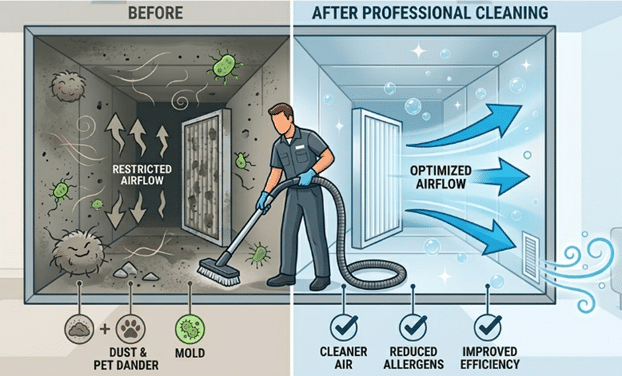
Cleaner ductwork may support healthier airflow throughout the home, especially for families dealing with allergies, dust sensitivity, or poor ventilation.
However, if elevated radon levels are present, the proper solution is a professionally designed Radon Mitigation system.
Can HVAC Systems Affect Radon Levels?
In some situations, heating and cooling systems may influence how radon moves through a home.
Air Pressure and Radon Movement
Homes naturally experience pressure differences caused by:
-
HVAC operation
-
Exhaust fans
-
Stack effect
-
Seasonal temperature changes
These pressure changes can sometimes affect how soil gases enter the structure.
Why Whole-Home Air Quality Matters
At Apex Radon Solutions, we look at indoor air quality as a complete system rather than a single issue. Ventilation, airflow, filtration, humidity, and radon mitigation all play a role in creating a healthier indoor environment.
In some homes, combining radon mitigation with HVAC improvements and duct cleaning may support:
-
Better airflow
-
Cleaner circulating air
-
Improved system efficiency
-
Reduced indoor contaminants
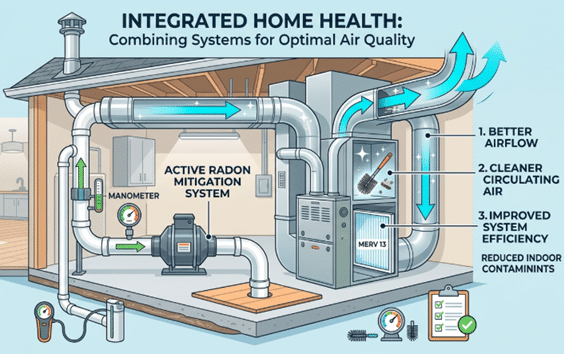
The right approach depends on the home’s layout, HVAC condition, and radon test results.
How Much Does Air Duct and Vent Cleaning Cost?
Another common question homeowners ask is: how much does air duct and vent cleaning cost?
Pricing varies depending on:
-
Home size
-
Number of vents
-
HVAC accessibility
-
Duct condition
-
System complexity
Average Air Duct Cleaning Costs
Professional air duct and vent cleaning services may range from:
-
$300 to $1,000+ for most residential homes
Additional costs may apply for:
-
Mold remediation
-
Dryer vent cleaning
-
Heavy contamination
-
Large HVAC systems
-
Multi-zone systems
While pricing matters, homeowners should focus on thorough cleaning methods, proper equipment, and reputable indoor air quality professionals rather than low-cost promotions that may provide incomplete service.
When Should Homeowners Consider Air Duct Cleaning?
Air duct cleaning may be worth considering if homeowners notice: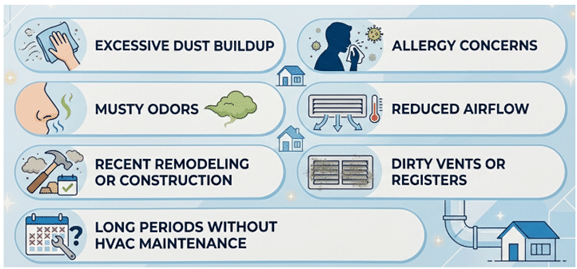
Although duct cleaning does not replace radon mitigation, it can still contribute to cleaner indoor air and better HVAC system performance.
The Importance of Testing Before Assuming
One of the most important steps in improving indoor air quality is accurate testing and diagnosis.
Many homeowners assume:
-
Dust means poor air quality
-
Vent cleaning solves all indoor air problems
-
New homes cannot have radon
-
HVAC filters stop radon gas
In reality, indoor air quality issues often involve multiple factors. Professional Radon Testing helps determine whether elevated radon levels are present and whether mitigation is necessary.
Trusted Indoor Air Quality and Radon Solutions
At Apex Radon Solutions, we believe indoor air quality should be approached as a complete system. Whether you’re concerned about elevated radon levels, poor airflow, or cleaner indoor air for your family, our team is here to provide clear answers and practical solutions.
From professional radon testing and mitigation to guidance on ventilation and air quality improvements, Apex Radon Solutions is committed to helping homeowners create safer, healthier living environments with confidence and care.
