What Is Radon Mitigation and How Does It Work?
What Is Radon Mitigation?
Many homeowners first hear the term “radon mitigation” after receiving a high radon test result. Naturally, one of the first questions that follows is: what is radon mitigation, and how does it actually protect a home?
Radon mitigation is the process of reducing radon gas levels inside a home or building. Because radon is an invisible, odorless radioactive gas that can enter through foundations and crawl spaces, mitigation systems are designed to safely redirect that gas before it accumulates indoors.
In this guide, we’ll explain how a radon mitigation system works, what homeowners can expect from radon mitigation services, possible installation and maintenance costs, and why professional system design matters. We’ll also touch on an important question many homeowners ask after learning about mitigation: Is radon dangerous?
Understanding Radon in Homes
Radon forms naturally in the soil as uranium breaks down underground. The gas can move upward through the ground and enter homes through:
-
Foundation cracks
-
Basement floors
-
Sump pits
-
Crawl spaces
-
Utility penetrations
-
Construction joints
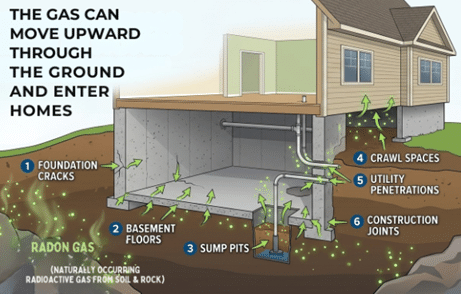
Because homes create pressure differences, radon can be pulled inside and trapped in living areas over time.
According to the United States Environmental Protection Agency, testing is the only way to know whether a home has elevated radon levels. Many homes with high radon levels show no visible signs or symptoms.
What Is a Radon Mitigation System?
A radon mitigation system is a specialized setup designed to reduce indoor radon concentrations by safely venting the gas outdoors before it enters occupied spaces.
How the System Works
Most residential systems use a method called sub-slab depressurization. This process involves:
- Creating a suction point beneath the home
- Installing PVC vent piping
- Using a continuously operating radon fan
- Venting radon safely above the roofline
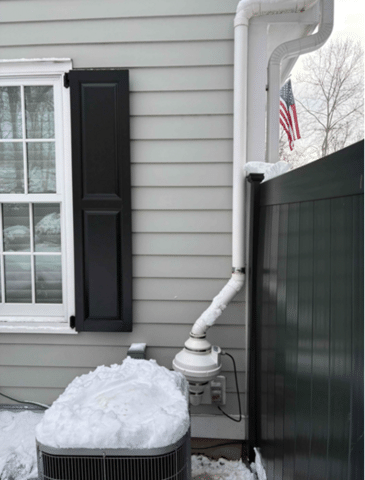
The goal is to create lower pressure beneath the foundation so radon gas is redirected outside instead of entering the home.
Main Components of a Radon Mitigation System
Radon Fan
The radon fan creates the suction needed to move gas safely through the piping system. These fans are built for continuous operation and are a key part of long-term system performance.
Vent Pipe System
PVC piping transports radon gas from beneath the home to a safe discharge location outdoors.
Sealing and Foundation Preparation
Small openings and cracks may be sealed to improve system efficiency and reduce unwanted airflow.
Monitoring Devices
Some systems include monitoring equipment that alerts homeowners if airflow or pressure changes occur.
Radon Mitigation Services: What Homeowners Can Expect
Professional radon mitigation services begin with understanding the home’s structure, airflow characteristics, and radon test results. Every property is different, which means mitigation systems should be customized rather than treated as one-size-fits-all installations.
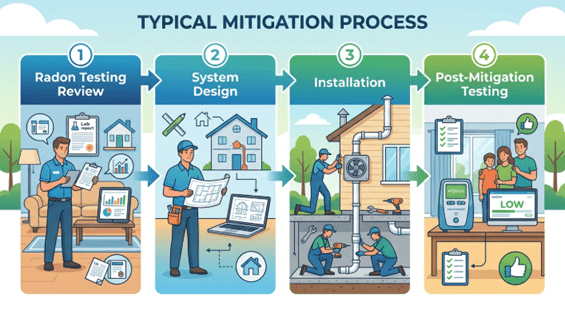
Typical Mitigation Process
Radon Testing Review
Professionals evaluate previous radon test results or perform additional testing if needed.
System Design
The mitigation contractor determines the best fan size, pipe routing, and suction strategy for the home.
Installation
Most residential systems can be installed in a single day depending on complexity and accessibility.
Post-Mitigation Testing
After installation, follow-up testing helps confirm that radon levels have been reduced effectively.
A properly designed system should operate quietly, efficiently, and consistently over the long term.
Radon Mitigation System Maintenance
Many homeowners are surprised to learn that radon systems require periodic maintenance and monitoring. While mitigation systems are generally low-maintenance, regular checks help ensure continued protection.
Important Maintenance Considerations
Monitor System Performance
Homeowners should occasionally inspect warning devices or gauges to confirm the system is operating properly.
Listen for Fan Changes
Unusual noises, vibration, or airflow changes may indicate fan wear or system issues.
Retest Radon Levels
Periodic retesting helps verify that radon levels remain low over time, especially after renovations or foundation changes.
Fan Lifespan
Most radon fans last approximately 5–10 years depending on operating conditions and system demand.
Regular maintenance helps prevent system failure and keeps indoor air quality protection consistent.
Possible Cost of Radon Mitigation
One of the most common homeowner concerns involves the possible cost of installing a radon mitigation system.
Average Mitigation Costs
Typical residential systems may range between:
-
$800 to $2,500+ depending on:
-
Home size
-
Foundation type
-
Crawl space conditions
-
Pipe routing complexity
-
Fan requirements
-
Electrical access
Additional services such as crawl space encapsulation or advanced diagnostics may increase the overall investment.
While cost matters, homeowners should also consider system reliability, installation quality, and long-term performance when comparing radon mitigation contractors.
Why Professional Installation Matters
A radon mitigation system is more than just a fan and a pipe. Proper diagnostics, airflow calculations, vent placement, and safety standards all affect how well the system performs.
Experienced radon mitigation contractors understand:
-
Pressure field extension
-
Foundation behavior
-
Fan sizing requirements
-
Moisture and condensation management
-
Local mitigation standards
Poorly installed systems may fail to reduce radon effectively or create unnecessary maintenance problems later.
Trusted Radon Mitigation Contractors and Services
At Apex Radon Solutions, we believe homeowners deserve clear answers, dependable workmanship, and solutions designed for long-term safety. Whether you need professional radon mitigation services, system maintenance, or guidance on reducing radon levels in your home, our team is here to help you make informed decisions with confidence.
If you’re looking for experienced radon mitigation contractors who prioritize healthy indoor air and reliable system performance, contact Apex Radon Solutions today to learn more about testing, mitigation, and ongoing support for your home.
