Is Radon Dangerous? What Homeowners Should Know
Is Radon Dangerous?
Many homeowners first hear about radon during a home inspection, real estate transaction, or indoor air quality test. One of the most common questions that follows is simple: Is radon dangerous?
The short answer is yes — long-term exposure to elevated radon levels can pose serious health risks. Because radon is invisible and odorless, many families have no idea they are being exposed until testing is performed.
In this article, we’ll explain what makes radon dangerous, what radon level is considered unsafe, the possible radon effects and symptoms associated with long-term exposure, and why homeowners in Connecticut should pay close attention to radon levels by ZIP code and regional geology.
What Is Radon?
Radon is a naturally occurring radioactive gas created by the breakdown of uranium in soil and rock. The gas moves through the ground and can enter homes through:
-
Foundation cracks
-
Basement floors
-
Crawl spaces
-
Sump pits
-
Utility openings
-
Construction joints
Once inside, radon can become trapped and accumulate to unsafe levels over time.
Because radon has no smell, color, or taste, testing is the only reliable way to detect it.
According to the United States Environmental Protection Agency, radon exposure is the second leading cause of lung cancer overall and the leading cause among non-smokers.
What Radon Level Is Dangerous?
One of the biggest misconceptions about radon is that only extremely high readings matter. In reality, any radon exposure carries some level of risk over time.
EPA Action Level
The EPA recommends taking action when radon levels reach:
-
4.0 pCi/L or higher
However, many professionals also encourage mitigation for levels between:
-
2.0–3.9 pCi/L
This is because there is no completely risk-free level of radon exposure.
Why Long-Term Exposure Matters
Radon risk is based on:
-
Radon concentration
-
Length of exposure
-
Smoking history
-
Overall indoor air conditions
A home with moderately elevated radon over many years may still present a significant health concern.
Radon Effects and Symptoms
One of the challenging aspects of radon exposure is that symptoms do not usually appear immediately. Radon-related health effects develop gradually over long periods of exposure.
Does Radon Cause Immediate Symptoms?
Most people exposed to elevated radon levels do not notice short-term symptoms. Radon does not typically cause headaches, dizziness, or immediate illness in the way carbon monoxide or mold sometimes can.
Instead, the concern involves long-term lung tissue damage from radioactive particles inhaled over time.
Possible Long-Term Effects
Long-term radon exposure may increase the risk of:
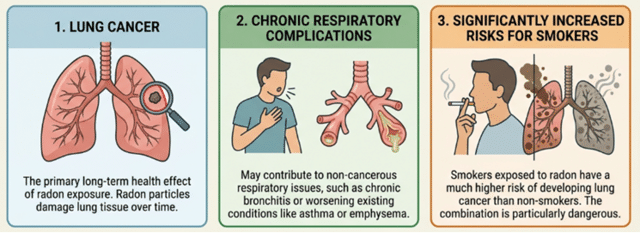
Because there are usually no early warning signs, testing becomes one of the most important tools for protecting indoor air quality.
Radon Levels by ZIP Code in Connecticut
Connecticut homeowners should be especially aware of radon because certain geological conditions throughout the state naturally contribute to elevated radon levels.
Why Connecticut Homes Can Have Higher Radon Levels
Parts of Connecticut contain granite-rich bedrock and soil formations that can release more radon gas. Elevated levels have been found in:
-
Basements
-
Crawl spaces
-
Older foundations
-
New construction homes
Radon Levels by ZIP Code
Radon levels can vary significantly even between neighboring homes. However, some Connecticut areas are known for increased radon potential, including portions of:
-
Hartford County
-
New Haven County
-
Fairfield County
-
Tolland County
-
Litchfield County
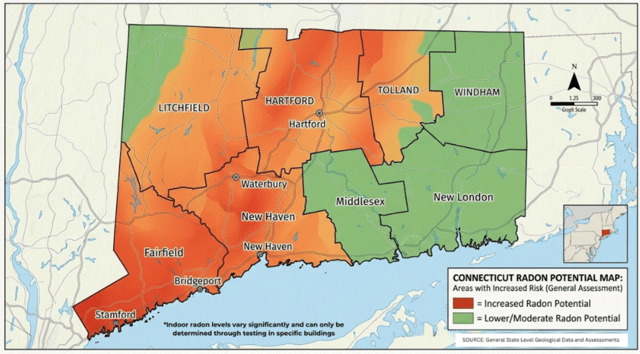
ZIP-code-based radon maps and historical testing data may help homeowners understand regional risk trends, but they should never replace direct testing inside the home itself.
Two homes on the same street can have very different radon readings depending on:
-
Foundation condition
-
Ventilation
-
Soil pathways
-
Construction methods
That’s why professional radon testing is strongly recommended regardless of ZIP code averages.
Why Testing Matters More Than Guessing
Many homeowners assume radon is only a concern in older homes or homes with basements. In reality, radon can affect:
-
New construction
-
Slab-on-grade homes
-
Crawl spaces
-
Finished basements
-
Multi-level homes
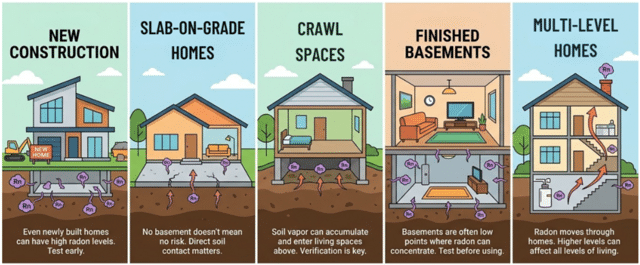
Because radon levels fluctuate seasonally and structurally, testing remains the only reliable way to understand actual exposure inside the home.
Common Reasons Homeowners Test for Radon
-
Buying or selling a home
-
Basement finishing projects
-
Family health concerns
-
Previous high radon readings
-
Long-term indoor air quality monitoring
Radon Testing provides clear information so homeowners can make informed decisions about mitigation if elevated levels are found.
Can Radon Be Reduced?
Yes. If testing shows elevated radon levels, professionally installed mitigation systems can significantly reduce indoor concentrations.
Most radon mitigation systems use:
-
Specialized vent piping
-
Continuous suction fans
-
Pressure control beneath the foundation
-
Safe exterior venting methods
Properly designed systems are often able to reduce radon levels effectively while operating quietly and efficiently.
Trusted Radon Testing and Mitigation Services
At Apex Radon Solutions, we believe homeowners deserve clear information and practical solutions when it comes to indoor air quality. Whether you’re concerned about dangerous radon levels, need professional testing, or want guidance on mitigation options, our team is here to help you make informed decisions with confidence.
If you’re looking for experienced radon professionals who prioritize safety, education, and long-term indoor air quality protection, contact Apex Radon Solutions today to learn more about radon testing and mitigation services for your home.
