Best Location for a Radon Detector in Your Home
Where Should You Place a Radon Detector?
A radon detector can only provide reliable information if it's placed in the right location. Unfortunately, many homeowners unknowingly place detectors in areas that can affect the accuracy of the results.
Since radon is invisible, odorless, and naturally occurring, proper detector placement is one of the most important parts of radon testing. Whether you're using a continuous radon monitor or a home testing device, knowing where to place a radon detector helps ensure you receive meaningful results.
In this guide, we'll explain the best location for a radon detector, where not to place it, and why proper placement matters for understanding your home's indoor air quality.
Why Detector Placement Matters
Radon Levels can vary significantly throughout a home.
Factors that influence readings include:
-
Airflow
-
Ventilation
-
HVAC operation
-
Humidity
-
Open windows and doors
-
Foundation design
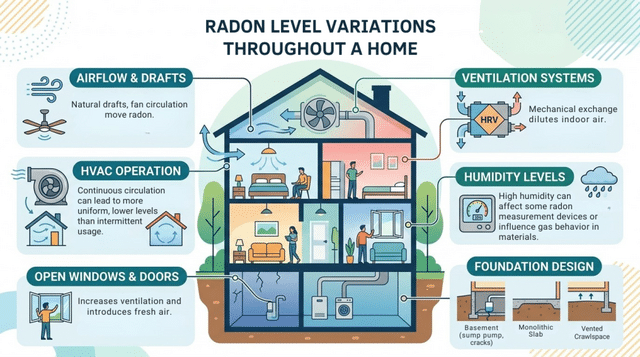
Improper placement may result in readings that do not accurately represent the air people are actually breathing.
At Apex Radon Solutions, we often remind homeowners that even the best testing equipment can provide misleading information if it is placed incorrectly.
The Best Place to Put a Radon Detector
Test the Lowest Livable Area
The general recommendation is to place the radon detector in the lowest level of the home that is regularly occupied.
This may include:
-
Finished basements
-
Family rooms
-
Home offices
-
Recreation rooms
-
First-floor living areas (if there is no basement)
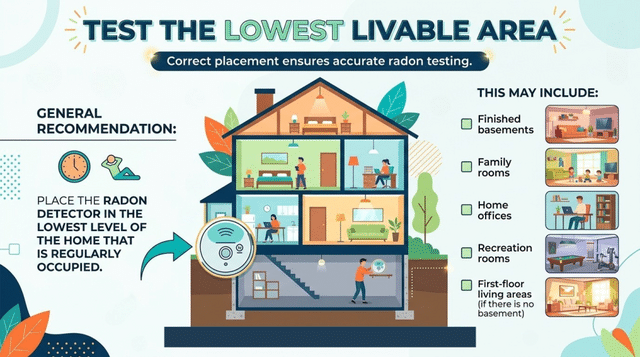
The goal is to measure radon levels where people actually spend time.
Why Lower Levels Matter
Radon enters homes from the soil beneath the foundation. Because of this, concentrations are often highest closer to the point of entry.
Testing lower levels helps provide a more accurate picture of potential exposure.
Proper Detector Placement Guidelines
For the most reliable results, place the detector:
✔ At least 20 inches above the floor
✔ Away from exterior walls
✔ In a frequently occupied room
✔ In an open area with normal airflow
✔ Away from direct sunlight
✔ Away from drafts and vents
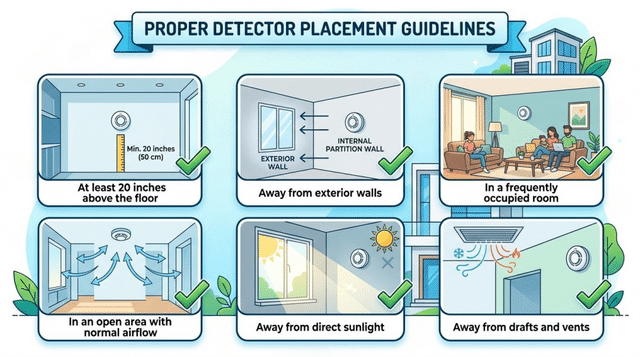
Following these guidelines helps prevent environmental conditions from affecting the test.
Where NOT to Place a Radon Detector
Certain locations can interfere with accurate measurements.
Avoid Windows and Exterior Doors
Openings can create airflow changes that artificially raise or lower readings.
Avoid Kitchens
Cooking activities, humidity, and ventilation systems can affect test results.
Avoid Bathrooms
High humidity and frequent airflow changes may impact readings.
Avoid Laundry Rooms
Appliances and moisture can create inconsistent conditions.
Avoid Crawl Spaces
Unless specifically directed by a radon professional, detectors are generally not placed directly in crawl spaces because the goal is to measure living-space exposure.
Avoid Near HVAC Registers
Heating and cooling vents can influence airflow around the detector and affect readings.
What About Basements?
Basements are often the ideal testing location when they are used regularly.
Test Finished Basements
If your basement is:
-
Finished
-
Occupied
-
Used as living space
it should usually be the primary testing location.
Unfinished Basements
Even unfinished basements are commonly tested because they are often the first area where radon enters the home.
Professional guidance can help determine the best placement based on the home's layout.
Should You Place a Detector Upstairs?
In most cases, radon testing focuses on the lowest occupied level of the home.
However, upper floors may also be tested when:
-
The home has no basement
-
Multi-level exposure is being evaluated
-
Long-term monitoring is desired
The primary concern remains the area where occupants spend the most time.
Best Radon Detector for Home
One of the most common questions homeowners ask is: what is the best radon detector for home use?
The answer depends on your goals. Some homeowners want continuous monitoring, while others simply need a basic screening test. Regardless of the device you choose, proper placement and regular monitoring are just as important as the detector itself.
Features to Look For in a Home Radon Detector
A quality radon detector should provide:
-
Accurate radon measurements
-
Easy-to-read results
-
Long-term monitoring capabilities
-
Reliable performance
-
Clear alerts for elevated radon levels
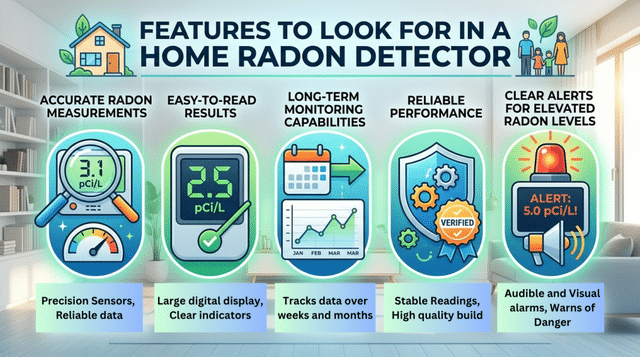
Many modern detectors offer digital displays and ongoing monitoring, allowing homeowners to track changes in radon levels throughout the year.
Continuous Monitoring Provides More Insight
Continuous Radon Monitors and digital detectors can provide a better understanding of how radon levels fluctuate due to:
-
Weather changes
-
Seasonal conditions
-
Ventilation patterns
-
HVAC operation
-
Home renovations
Because radon levels naturally vary over time, continuous monitoring often provides more useful information than a single short-term test.
Common Radon Testing Mistakes
Homeowners sometimes accidentally compromise test accuracy by:
-
Placing detectors near windows
-
Moving the detector during testing
-
Testing in unused storage areas
-
Placing devices next to vents
-
Ignoring manufacturer instructions
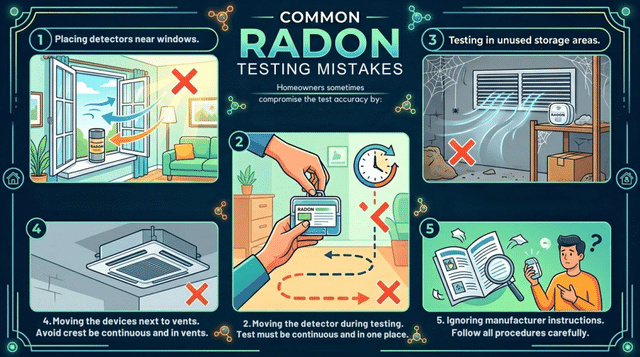
Small placement errors can significantly affect the quality of the results.
What If Your Detector Shows Elevated Radon Levels?
If testing reveals elevated radon concentrations, additional testing or professional evaluation may be recommended.
Most Radon Mitigation Systems use:
-
Specialized vent piping
-
Continuous radon fans
-
Sub-slab depressurization
-
Crawl space mitigation methods
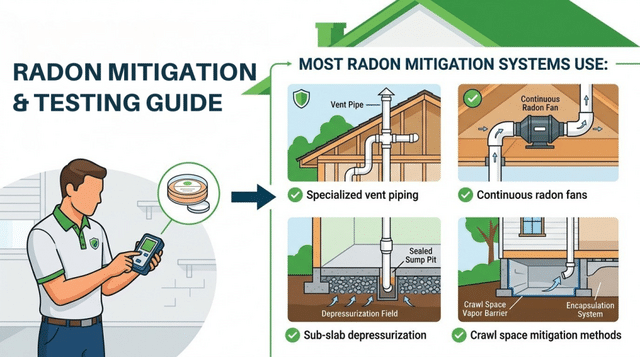
These systems are designed to reduce radon levels and improve long-term indoor air quality.
Professional Testing Remains the Gold Standard
While home detectors can be excellent tools for ongoing awareness, professional radon testing remains the most reliable way to evaluate indoor radon levels accurately.
Professional-grade Continuous Radon Monitors (CRMs) provide:
-
Hourly radon readings
-
Detailed reporting
-
Tamper detection
-
Quality assurance measures
-
More comprehensive analysis
Trusted Radon Testing and Indoor Air Quality Solutions
At Apex Radon Solutions, we believe accurate testing starts with proper placement and reliable equipment. Whether you're testing your home for the first time or monitoring an existing mitigation system, our team is here to provide clear guidance and dependable service.
From professional radon testing and continuous radon monitoring to mitigation and indoor air quality solutions, Apex Radon Solutions helps homeowners make informed decisions with confidence.
If you have questions about radon detector placement or want professional radon testing performed in your home, contact Apex Radon Solutions today.
