Loud Radon Fan? Common Causes and What Homeowners Should Know
What Causes a Loud Radon Fan?
A Radon Mitigation System is designed to operate quietly in the background while continuously protecting your home's indoor air quality. That's why many homeowners become concerned when they suddenly notice a loud radon fan or hear unusual noises coming from their system.
While some fan noise is normal, excessive humming, vibration, rattling, or buzzing may indicate that the system needs attention.
In this guide, we'll explain the most common causes of a loud radon fan, what a radon fan loud humming noise might mean, and when homeowners should consider professional inspection or replacement.
Is a Radon Fan Supposed to Be Loud?
Under normal operating conditions, a radon fan should produce only a low, steady sound.
Most homeowners may not notice the fan at all, especially when:
-
The fan is properly installed
-
Vibration isolation is used
-
The system is operating correctly
-
The fan is located outside living areas
If the sound suddenly becomes more noticeable, it could be a sign that something has changed within the system.
Common Causes of a Loud Radon Fan
Aging Fan Motor
One of the most common causes of a loud radon fan is simple wear and tear.
Most radon fans operate:
-
24 hours a day
-
365 days a year
Over time, internal motor components naturally wear down.
Signs of motor wear may include:
-
Increased humming
-
Grinding sounds
-
Vibration
-
Intermittent noise
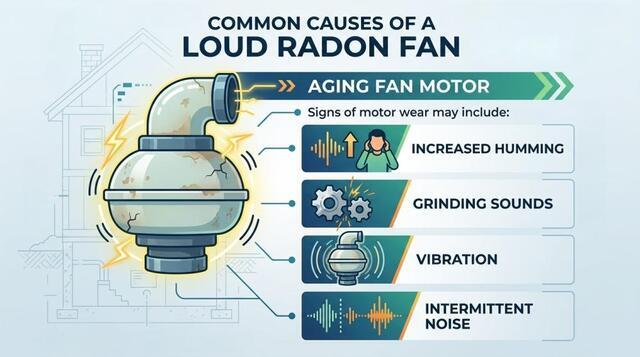
As the fan ages, these sounds often become more noticeable.
Radon Fan Loud Humming
A radon fan loud humming noise is one of the most frequently reported homeowner concerns.
What Causes Humming?
Humming may occur due to:
-
Motor wear
-
Electrical issues
-
Bearing deterioration
-
Increased system resistance
-
Loose mounting hardware
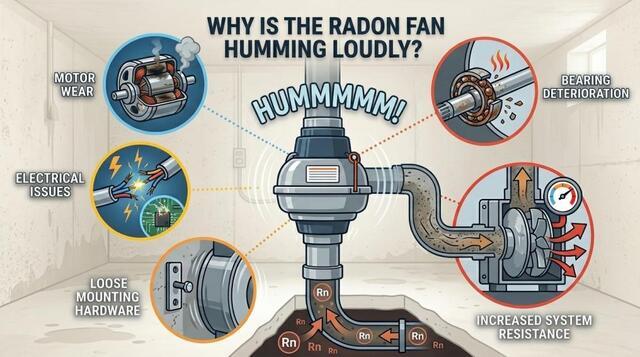
A slight hum is normal, but a humming noise that suddenly becomes louder should be evaluated.
Fan Vibration
Sometimes the fan itself is not the only source of the noise.
Vibration can travel through:
-
PVC piping
-
Exterior walls
-
Mounting brackets
-
Structural framing
This may create:
-
Buzzing sounds
-
Rattling noises
-
Vibrations felt inside the home
Proper installation techniques typically include vibration control measures to minimize these issues.
Loose Components
Over time, system components may loosen due to:
-
Weather exposure
-
Temperature changes
-
Normal system operation
Loose components can create:
-
Rattling
-
Tapping
-
Vibrating sounds
A simple inspection may identify hardware or piping that requires adjustment.
Condensation and Airflow Issues
Some radon systems develop condensation inside vent piping.
In certain situations, homeowners may hear:
-
Dripping sounds
-
Gurgling noises
-
Airflow changes
While not always serious, these conditions should be evaluated to ensure proper system performance.
When a Loud Radon Fan May Indicate Failure
A noisy fan does not always mean failure is imminent, but homeowners should pay attention to changes in system behavior.
Warning Signs Include:
-
Significant increase in noise
-
Loud humming or grinding
-
Fan vibration
-
Reduced system suction
-
Warning monitor alerts
-
Higher radon test results
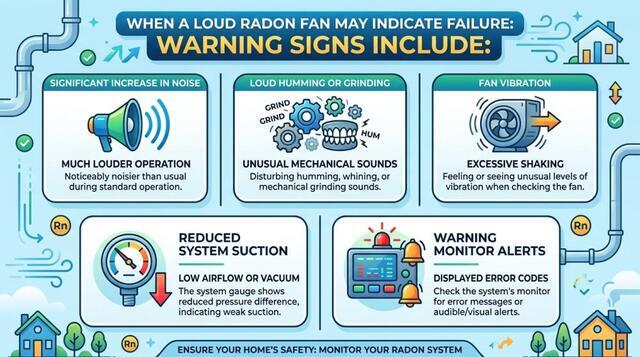
If multiple symptoms occur together, the fan may be approaching the end of its service life.
How Long Does a Radon Fan Last?
Most radon fans typically last:
-
5 to 10 years
-
Sometimes longer depending on operating conditions
Factors affecting lifespan include:
-
Fan quality
-
Climate exposure
-
System design
-
Moisture conditions
-
Continuous workload
Because radon fans run nonstop, eventual replacement is considered a normal part of system ownership.
Should You Ignore a Loud Radon Fan?
It's generally not a good idea to ignore significant changes in fan noise.
Why Early Attention Matters
A failing fan may eventually:
-
Stop operating completely
-
Reduce mitigation effectiveness
-
Allow radon levels to increase
-
Create additional system wear
Addressing small problems early often helps prevent larger repairs later.
Can a New Radon Fan Be Quieter?
Yes.
Modern radon fan technology has improved significantly over the years.
Newer fans often offer:
-
Improved efficiency
-
Reduced vibration
-
Quieter operation
-
Better energy performance
-
Longer service life
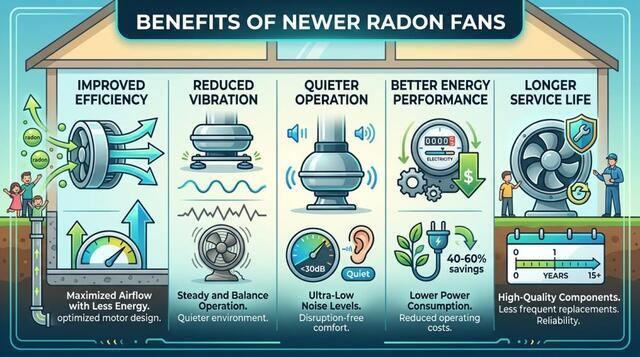
If an older fan has become noticeably loud, replacement may improve both system performance and homeowner comfort.
The Importance of Routine Radon System Maintenance
At Apex Radon Solutions, we encourage homeowners to periodically check their mitigation systems for signs of:
-
Unusual noise
-
Airflow changes
-
System alerts
-
Visible damage
-
Performance concerns
Routine monitoring helps ensure the system continues protecting your indoor air quality as intended.
Trusted Radon Fan Inspection and Replacement Services
At Apex Radon Solutions, we understand that a loud radon fan can be frustrating and concerning. Our goal is to help homeowners understand what their mitigation system is telling them and provide practical solutions that protect indoor air quality.
Whether you need a radon fan inspection, troubleshooting, maintenance, or complete fan replacement, our team is here to help. We take the time to evaluate the entire mitigation system to ensure it continues operating safely, efficiently, and reliably.
If you've noticed a loud radon fan, unusual humming, or changes in system performance, contact Apex Radon Solutions today to schedule a professional evaluation and keep your home's radon protection working at its best.
