Fall Is Here: Is Your Home Ready for Radon Season?
Fall Is Here: Is Your Home Ready for Radon Season?
The leaves are changing, the mornings are getting cooler, and we're starting to spend more time indoors.
For many homeowners, fall means a familiar checklist: clean the gutters, service the heating system, check the roof, seal up drafts, and prepare the home for colder weather.
But there's one item that often gets overlooked:
Radon testing.
As temperatures drop and windows begin to close, our homes start operating differently. We spend more time indoors, use our heating systems more often, and naturally reduce ventilation.
That makes fall an excellent time to think about fall radon testing.
If you've never tested your home for radon, this is a good opportunity to start. If you've tested before, fall can also be a smart time to retest and see whether your home's radon levels have changed.
In this article, we'll explain why fall is an important season for radon testing, how seasonal changes can affect indoor air quality, what homeowners should know before testing, and when professional radon mitigation may be necessary.
Why Fall Is an Important Time for Radon Testing
Radon isn't seasonal in the sense that it suddenly appears in the fall.
Radon is naturally occurring and can enter a home throughout the year.
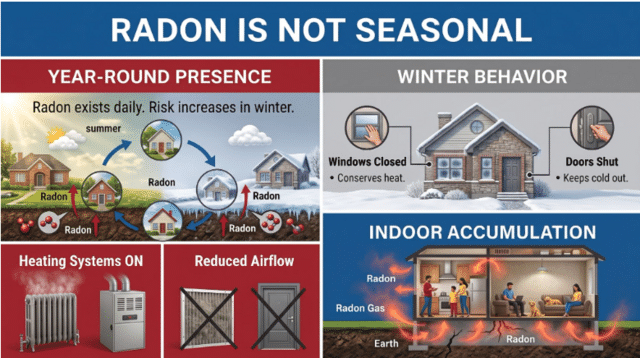
What changes is how the home behaves.
As the weather gets colder, homeowners typically:
-
Close windows
-
Keep exterior doors closed more often
-
Turn on heating systems
-
Spend more time indoors
-
Reduce natural ventilation
These changes can affect how air moves through the home.
Because radon enters from the soil beneath and around a building, changes in indoor pressure and ventilation can influence how much radon accumulates inside.
This is one reason fall radon testing can be a valuable part of your seasonal home maintenance routine.
What Is Radon?
Before talking about radon season, it helps to understand what we're actually testing for.
Radon is a naturally occurring radioactive gas produced by the breakdown of uranium in soil and rock.
It can move through the ground and enter a home through openings such as:
-
Foundation cracks
-
Basement floors
-
Crawl spaces
-
Sump pits
-
Floor drains
-
Construction joints
-
Gaps around pipes and utilities
Once inside, radon can accumulate.
The challenge is that you can't see it, smell it, or taste it.
Your home can look completely clean and well maintained while still having elevated radon levels.
Testing is the only way to know what's actually happening.
What Happens to Your Home When Fall Arrives?
Think about what happens when you prepare your home for colder weather.
You close the windows.
You turn on the furnace.
You seal up drafts.
You spend more time inside.
All of these things affect the way air moves through the building.
Your Home Becomes More Closed Off
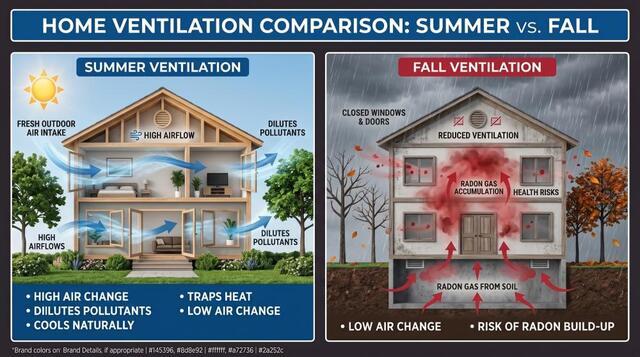
During the summer, you may have windows open regularly. Outdoor air moves through the house, and natural ventilation can be higher.
In the fall, that changes.
The home becomes more closed up, which can reduce natural air exchange.
That matters because radon entering from the soil can become more concentrated when less indoor air is exchanged with outdoor air.
Heating Changes Air Movement
Your heating system also changes how air moves through the home.
Pressure differences between the interior of the home and the soil beneath it can contribute to soil gas entering through foundation openings.
This doesn't mean turning on your heat automatically causes a radon problem.
It means seasonal changes can influence the conditions under which radon moves and accumulates.
That's why testing is more useful than guessing.
Fall Radon Testing: What Homeowners Should Know
If you've never tested your home, fall is a good time to put radon testing on your maintenance list.
A Radon Test Measures the Air in Your Home
Testing devices measure the concentration of radon over a specific period.
Depending on the testing method, you may use:
-
A short-term test
-
A long-term test
-
A continuous radon monitor
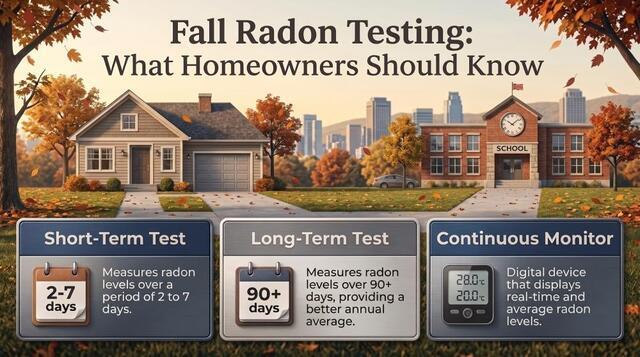
Each method has a different purpose.
For homeowners who need a quick screening, short-term testing may provide useful information.
For a more complete understanding of radon levels over time, long-term testing can provide additional information.
Professional testing can also provide proper placement, controlled testing conditions, and reliable reporting.
Is Fall the Best Time to Test for Radon?
This is a question we hear often.
The answer is that radon testing can be performed year-round.
However, colder seasons are often useful testing periods because homes tend to be more closed up.
This is especially relevant in Connecticut, where fall and winter bring significant changes in outdoor temperature and how homes are operated.
But we don't want homeowners to wait for the "perfect" season.
If you've never tested your home, testing now is better than waiting.
The most important thing is knowing your home's actual radon level.
Is Your Basement Ready for Fall?
Your basement deserves special attention during fall.
Basements are often the lowest occupied areas of a home and may be closer to the pathways through which radon enters.
Fall is a good time to take a look around.
Check for:
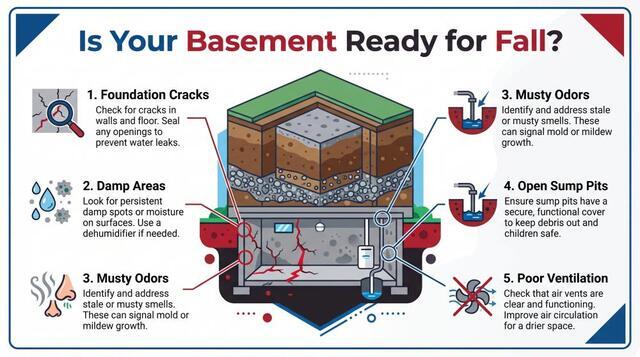
These conditions don't automatically mean you have elevated radon.
But they are good reasons to think about the overall condition of your home's indoor environment.
Fall Is Also a Good Time to Review Your Radon Mitigation System
Already have a radon mitigation system?
Don't assume the job is finished just because the fan is running.
Your system works continuously, often 24 hours a day, 365 days a year.
That means fall is a good time to check whether everything is still operating properly.
Look and Listen for Changes
Pay attention to:
-
Unusual fan noise
-
Loud humming
-
Vibrations
-
Damaged piping
-
System alarms
-
Changes in fan operation
A sudden change in the sound of your radon fan can sometimes indicate that the system needs attention.
If your fan is becoming unusually loud, our previous article “What Causes a Loud Radon Fan?” goes into more detail about common causes and when professional inspection may be appropriate.
What If You've Tested Before?
If you've tested your home in the past and received a low result, that's good information — but it doesn't mean you never need to test again.
Homes change.
Soil conditions change.
HVAC systems change.
Renovations happen.
The basement is finished.
Crawl spaces get encapsulated.
And mitigation systems eventually require maintenance.
That's why periodic radon testing is an important part of maintaining a healthy indoor environment.
If you've recently:
-
Renovated your basement
-
Changed your HVAC system
-
Installed a mitigation system
-
Completed crawl space work
-
Made structural changes
consider discussing whether retesting is appropriate.
What If My Radon Test Comes Back High?
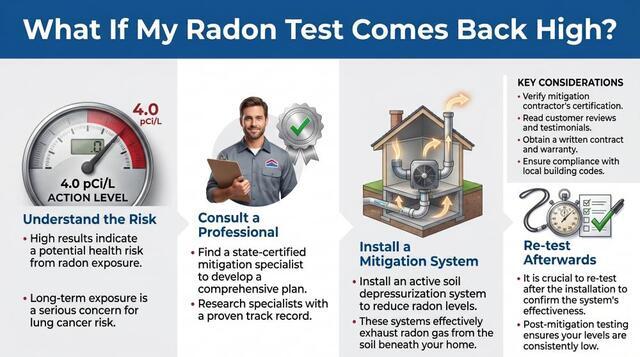
Radon Mitigation Can Reduce Elevated Levels
A properly designed mitigation system may use:
-
Radon-resistant piping
-
A radon fan
-
Sub-slab depressurization
-
Sub-membrane depressurization
-
Crawl space mitigation
-
Other building-specific techniques
The right system depends on how your home is constructed and where radon is entering.
This is why we don't recommend choosing a mitigation solution based on a one-size-fits-all approach.
Your home should be evaluated as a system.
Fall Indoor Air Quality: Look Beyond Radon
Fall is also an excellent time to think about your home's overall indoor air quality.
Radon is important, but it's not the only factor that affects the air inside your home.
As we close up our homes for the colder months, we may also see changes in:
