Air Purifier vs. Humidifier: What Improves Indoor Air Quality?
Can Air Purifiers Help with Mold?
Indoor air quality problems often involve more than one issue at a time. Homeowners dealing with musty odors, allergies, humidity, or poor airflow commonly ask: can air purifiers help with mold?
The short answer is yes — air purifiers may help reduce airborne mold spores and improve indoor air quality. However, it’s important to understand that air purifiers do not remove the actual source of mold or excess moisture inside the home.
At Apex Radon Solutions, we believe healthier indoor air starts with understanding how ventilation, humidity, filtration, mold, and radon all work together inside the home environment.
In this guide, we’ll explain how air purifiers help with mold, the difference between an air purifier and humidifier, how often air filters should be changed, and why indoor air quality concerns sometimes overlap with radon problems.
Can Air Purifiers Help with Mold?
How Air Purifiers Work
Air purifiers are designed to capture airborne particles circulating through indoor air. Depending on the system and filter type, they may help reduce:
-
Dust
-
Pet dander
-
Pollen
-
Smoke particles
-
Mold spores
-
Certain airborne allergens
Many high-quality systems use HEPA filtration to trap microscopic particles before they continue circulating through the home.
What Air Purifiers Can and Cannot Do
Air purifiers may help improve indoor air quality by reducing airborne mold spores, but they do not:
-
Remove mold growing behind walls
-
Fix water intrusion
-
Eliminate moisture problems
-
Prevent future mold growth on their own
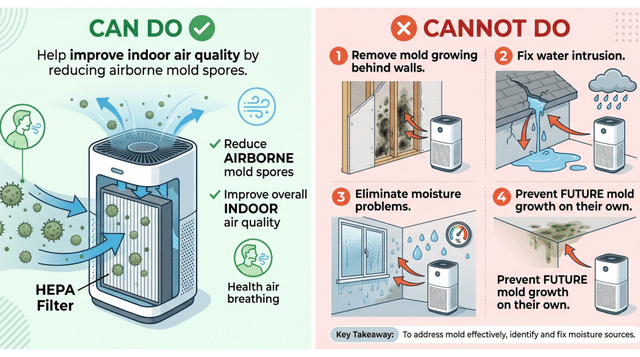
If mold is caused by high humidity or water issues, those conditions still need to be corrected directly.
Why Moisture Control Matters
Mold growth often begins because excess moisture exists somewhere inside the home.
Common Causes of Indoor Moisture
-
Damp basements
-
Crawl space humidity
-
Poor ventilation
-
Water leaks
-
Condensation
-
High indoor humidity
This is why humidity control is one of the most important parts of long-term indoor air quality improvement.
The Role of Dehumidification
Proper dehumidification helps:
-
Reduce moisture buildup
-
Limit mold-friendly conditions
-
Improve comfort
-
Support healthier air circulation
In many homes, combining filtration and dehumidification provides better results than relying on either solution alone.
Air Purifier for Allergy Relief
Many homeowners also use an air purifier for allergy concerns.
How Air Purifiers Help Allergies
Air purification systems may help reduce airborne:
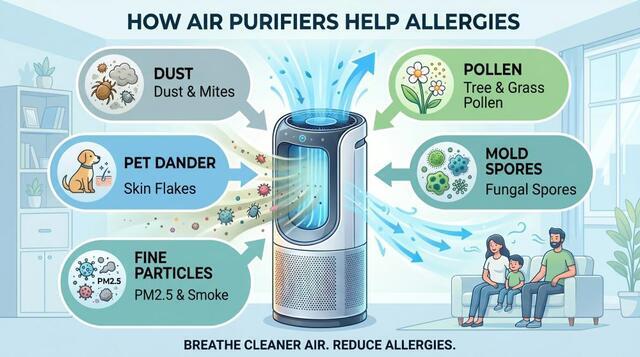
Cleaner circulating air may help improve comfort for individuals sensitive to airborne irritants.
However, if moisture and mold problems remain untreated, allergy symptoms may continue despite filtration improvements.
Air Purifier vs. Humidifier: What’s the Difference?
One common misunderstanding involves the difference between an air purifier vs. humidifier.
Air Purifier
An air purifier focuses on cleaning the air by filtering airborne particles and contaminants.
Humidifier
A humidifier adds moisture to dry indoor air to improve comfort during low-humidity conditions.
Why Too Much Humidity Can Be a Problem
While humidifiers can help in dry environments, excessive humidity may contribute to:
-
Mold growth
-
Dust mites
-
Condensation
-
Musty odors
That’s why indoor humidity balance matters. In many basements and crawl spaces, dehumidification — not humidification — is often the healthier solution.
How Often Should Air Filters Change?
Another common homeowner question is: how often should air filters change?
General Filter Replacement Guidelines
Many HVAC and air purification filters should be checked every:
-
1–3 months
However, replacement schedules depend on:
-
Filter type
-
Pets in the home
-
Allergy concerns
-
Indoor air quality conditions
-
HVAC usage
-
Construction dust or remodeling
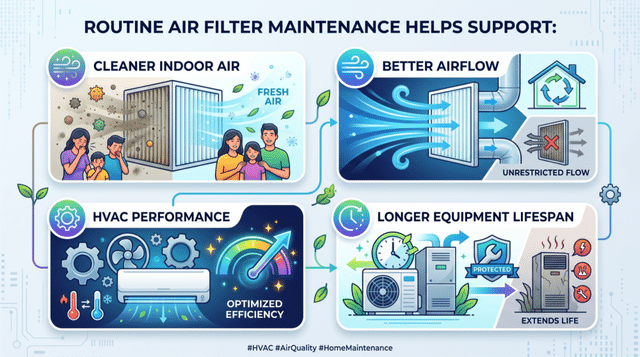
Dirty filters can reduce airflow efficiency and limit the effectiveness of the system.
Routine maintenance helps support:
The Connection Between Mold, Air Quality, and Radon
At first glance, mold and radon may seem unrelated. But both are important indoor air quality concerns that often affect the same lower areas of the home.
Shared Problem Areas
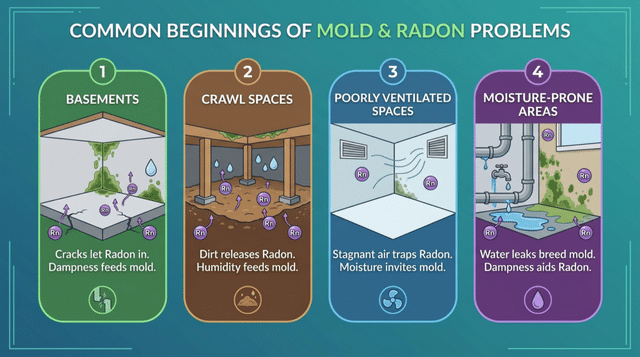
Both mold and radon problems commonly begin in:
-
Basements
-
Crawl spaces
-
Poorly ventilated spaces
-
Moisture-prone areas
Why Whole-Home Indoor Air Quality Matters
Homes with moisture issues may also experience:
-
Poor ventilation
-
Increased indoor pollutants
-
Airflow imbalances
-
Higher humidity conditions
Radon itself is different from mold because it is a radioactive gas, not a biological contaminant. Air purifiers generally do not remove radon gas effectively.
If elevated radon levels are present, professional radon mitigation systems are typically needed to safely reduce concentrations indoors.
This is why a complete indoor air quality approach matters. Filtration, humidity control, ventilation, and radon mitigation all work together to create a healthier living environment.
Improve Indoor Air Quality with Apex Radon Solutions
At Apex Radon Solutions, we believe indoor air quality should be approached as a complete system. From radon mitigation and dehumidification to filtration and ventilation improvements, our goal is to help homeowners create safer, healthier indoor environments with confidence.
Whether you’re dealing with mold concerns, humidity problems, allergy symptoms, or elevated radon levels, our team is here to provide clear guidance and practical indoor air quality solutions tailored to your home.
Contact Apex Radon Solutions today to learn more about improving your home’s air quality and protecting the spaces where your family lives every day.
