Is Radon a Hoax? Understanding the Real Risk of Radon
Is Radon a Hoax?
Because radon is invisible, odorless, and impossible to detect without specialized testing, some homeowners wonder: is radon a hoax?
It’s an understandable question. After all, many people have lived in homes for years without ever hearing about radon, and some assume concerns about indoor air quality are exaggerated.
But radon is not a hoax. Radon is a naturally occurring radioactive gas that has been studied for decades by major health and environmental organizations. The real challenge with radon is not whether it exists — it’s that many homeowners have no idea it may be present inside their homes unless testing is performed.
In this article, we’ll explain the real risk of radon, why even new homes can have elevated levels, and why radon testing remains one of the most important steps homeowners can take to better understand indoor air quality.
Why Some People Think Radon Is a Hoax
There are several reasons why misconceptions about radon continue to circulate.
Radon Cannot Be Seen or Smelled
Unlike smoke, mold, or water damage, radon has no visible warning signs. Many homeowners expect dangerous conditions to look obvious, but radon does not work that way.
Homes Often “Feel Fine”
A home with elevated radon levels may appear:
-
Clean
-
Comfortable
-
Well-maintained
-
Newly built
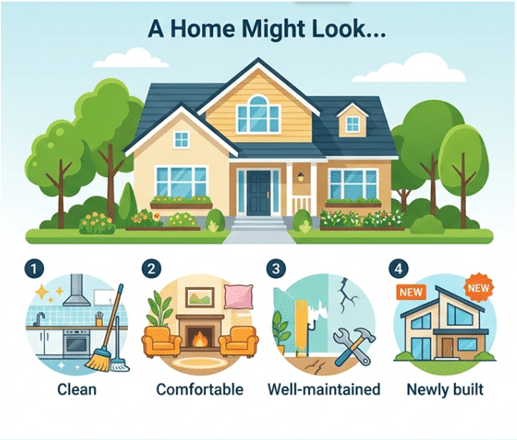 This can make it difficult for some people to believe a hidden indoor air quality issue may exist.
Symptoms Do Not Appear Immediately
Radon exposure does not usually cause immediate symptoms. Health concerns are related to long-term exposure over many years, which makes the risk easier for some homeowners to overlook.
The Real Risk of Radon
The risk of radon comes from prolonged exposure to radioactive particles that can become trapped inside the lungs after inhalation.
Why Long-Term Exposure Matters
Higher radon levels combined with long-term exposure may increase the risk of:
-
Lung cancer
-
Respiratory health concerns
-
Increased risk for smokers
The risk becomes significantly greater when smoking and elevated radon exposure are combined.
That’s why testing and mitigation are recommended even when homeowners do not notice immediate health symptoms.
Debunking the Myth About New Homes
One of the most common misconceptions is that only older homes have radon problems.
New Homes Can Have High Radon Levels Too
In reality, elevated radon has been found in:
-
Brand-new homes
-
Energy-efficient homes
-
Recently renovated homes
-
Slab-on-grade homes
-
Homes with crawl spaces
-
Finished basements
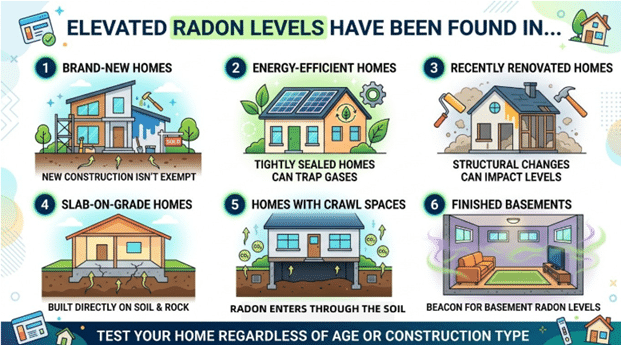
Modern construction methods may actually create tighter building envelopes that trap indoor gases more efficiently.
Why Neighboring Homes Can Test Differently
Even homes built side-by-side may have different radon readings because of:
-
Soil composition
-
Air pressure differences
-
Foundation design
-
Ventilation patterns
-
Drainage conditions
That’s why every home should be tested individually.
Why Radon Testing Matters
Since radon cannot be detected without specialized equipment, testing remains the foundation of indoor air quality awareness.
Common Times Homeowners Test for Radon
-
During home purchases
-
After renovations
-
Before finishing basements
-
During indoor air quality evaluations
-
Every few years as routine monitoring
Professional radon testing provides clear information so homeowners can make informed decisions rather than relying on assumptions.
Can Elevated Radon Be Reduced?
Yes. Homes with elevated radon levels can often be mitigated successfully.
How Radon Mitigation Works
Most mitigation systems use:
-
Specialized vent piping
-
Continuous radon fans
-
Sub-slab depressurization
-
Crawl space mitigation systems
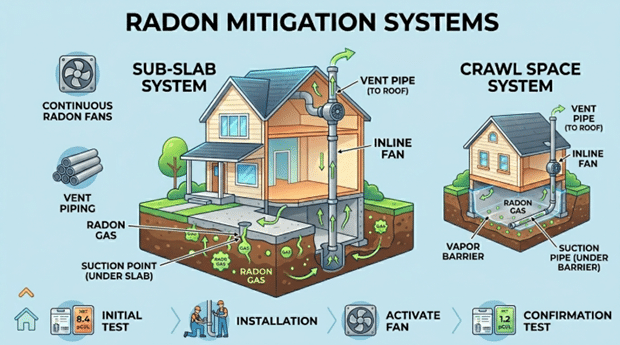
These systems help redirect radon gas outdoors before it enters living areas.
At Apex Radon Solutions, we remind homeowners that discovering elevated radon levels is not about panic — it’s about understanding your indoor environment and taking practical steps to improve it.
Indoor Air Quality Is About the Whole Home
Radon is only one part of the indoor air quality picture.
Homes with elevated radon may also experience:
-
Moisture problems
-
Crawl space humidity
-
Poor ventilation
-
Mold concerns
-
Airflow imbalances
That’s why we believe healthier homes begin with looking at the complete indoor environment — not just a single issue in isolation.
Trusted Radon Testing and Indoor Air Quality Solutions
At Apex Radon Solutions, we believe homeowners deserve straightforward information, practical solutions, and guidance they can trust. Whether you’re learning about radon for the first time or looking for professional testing and mitigation services, our team is here to help you make informed decisions about your indoor air quality with confidence.
If you have questions about radon testing, mitigation systems, or improving the health of your indoor environment, contact Apex Radon Solutions today to learn more about protecting your home and family.
Related Content:

